



Over the past year, Russia has mounted increasingly frequent acts of aggression against European states, while along Europe’s eastern frontiers the formation of new military units facing the Baltic states continues unabated. Although the fog of war obscures what lies ahead, all states across the region are preparing for war — whether defensive or offensive. Against this backdrop, the question of Belarus and its dictator has resurfaced on the strategic agenda, whose structural dependence on Moscow leaves virtually no room for political manoeuvre.
How Belarus is preparing for a war it does not seek, and the precise ways in which it might be drawn into it, is examined in this paper.
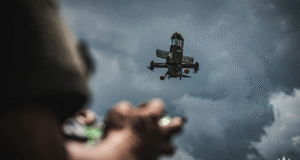
The rapid evolution of UAV technology in military affairs, accompanied by an expansion of reconnaissance capabilities, the compression of the sensor-to-shooter loop, and varying degrees of personnel and materiel shortages on both sides of the Russo-Ukrainian War, has halted significant frontline movement notwithstanding ongoing hostilities. The consequence — as previously observed in the First World War and the Iran–Iraq War — has been the emergence of a war of economic attrition.
Despite generalised stagflation within the Russian economy, an investment crunch, and extractive domestic tax reforms on the one hand, and the total disruption of seaborne exports, acute crises across the agrarian and metallurgical sectors, and systematic strikes against Ukrainian energy infrastructure on the other, the economies of both states continue to demonstrate sufficient resilience to sustain the war over a prolonged timeframe. In Ukraine’s case, this resilience is largely attributable to financial assistance and arms transfers provided by its European partners.
Russia’s overarching strategic objective — to force a reconfiguration of the European security architecture to accommodate its ambitions, specifically NATO’s retrenchment westward or its outright disintegration — remains even further out of reach today than it was in 2022. The inability to achieve these stated goals through the war against Ukraine could compel Moscow to resort to its customary playbook: escalating via a direct assault against NATO itself in the Baltic states. Exploiting the ostensible disengagement of the United States from European defence alongside the sluggish pace of European military reconstitution, Moscow would confront Europeans with a stark dilemma over invoking Article 5 and deploying ground troops into combat.
At present, there are no definitive indicators presaging an invasion within the coming months; nonetheless, the risk of a full-scale assault on the Baltic region remains acute over the medium to long term. Every concession made to the Russian Federation and every fracture in European unity only heightens this threat. The primary bulwark against the further expansion of Russia’s war across Europe is Kyiv. The Ukrainian theatre consumes more Russian personnel killed and wounded each month than average monthly recruitment rates — including increasingly prevalent instances of coerced enlistment — can offset. Sustaining a strategic offensive operation requires the relentless commitment of resources by the Russian Armed Forces, which complicates — though does not entirely preclude — the massing of the substantial manpower and materiel required for an invasion.
The Bundeswehr and NATO consider a Russian attack on the Alliance plausible by 2029. France projects the window of vulnerability for a potential ground invasion to be between 2027 and 2030. Concurrently, in a broader sense, Russia is already conducting hostilities against Europe: mounting acts of sabotage and terrorism against defence manufacturing plants, munitions depots, and commercial aviation; targeting the critical infrastructure of European states across both cyber and physical domains; orchestrating arson campaigns; and weaponising migration flows. Russian UAVs and missiles have repeatedly violated EU airspace, and the risk of such incursions intensifying remains acute.
Such a shadow warfare does not necessitate the commitment of vast manpower or conventional armaments; waged predominantly through intelligence and security services, it presents a far lower operational threshold for Russia. However, even when successful, its dividends remain tactical, incapable of fundamentally altering the political landscape of the European subcontinent. This provides an added rationale as to why the contingency of a conventional land invasion of the Baltic states cannot be discounted. Consequently, the question of Belarus becomes critical.
On 24 February 2022, the Russian armed forces commenced hostilities possessing full-strength infantry formations, an extensive inventory of combat hardware, the reputation of being Europe’s most formidable military force, and an unshakeable belief in a swift victory. The grouping tasked with seizing the Ukrainian capital launched its offensive directly from Belarusian territory. However, heavy combat losses and the failure of the blitzkrieg against Kyiv compelled the Russian Federation to rapidly overhaul its operational model and seek external reinforcement.
As early as the spring of 2022, the formation and manoeuvres of battalion tactical groups within Belarus raised acute concerns regarding Minsk’s imminent and direct entry into the war as an active co-belligerent.
Whilst this specific contingency did not materialise, the structural integration of the armed forces of Belarus and Russia accelerated sharply from 2022 onwards. A pivotal milestone was reached in 2023, when Moscow stationed tactical nuclear warheads on Belarusian soil at the 1405th Artillery Ammunition Base, having transferred 24 Iskander-M short-range ballistic missile (SRBM) systems (a figure corroborated by satellite imagery of newly constructed hardened shelters). The following year, in 2024, Minsk fully aligned its military doctrine with Moscow’s, formally extending Russia’s ‘nuclear umbrella’ over Belarus. Furthermore, the Joint Regional Air Defence System agreement, operational since 2009, continues to provide the institutional framework for the operational integration of both nations’ air defence assets.
At the onset of the invasion, Belarus’s complicity was largely confined to providing a staging ground for Russian land forces and facilitating stand-off air and missile strikes from its territory. By 2026, however, Belarus is more accurately characterised as Russia’s protected rear area. Although regular Belarusian formations are not directly committed to kinetic operations, the Lukashenka regime affords the Kremlin comprehensive assistance across other operational and economic domains.
The successful deep-strike campaign conducted by the Ukrainian defence forces against Russian oil refineries precipitated acute shortages across the Russian domestic petrol and diesel markets. The output capacity of the Mozyr and Novopolotsk refineries, originally constructed in the Soviet era to supply Western Europe, vastly exceeds the domestic consumption of Belarus. Whereas their refined products were previously exported to European markets, they are now channelled almost entirely to the Russian Federation. Their location inside Belarus shields them from Ukrainian strikes, enabling export volumes to Russia to surge. At present, Belarusian fuel supplies constitute 6% of the Russian domestic market — an approximate fourfold increase over the past 12 months.
Belarusian industry has been effectively co-opted into the production cycles of the Russian defence-industrial base. Approximately 500 Belarusian enterprises are engaged in manufacturing military hardware, overhauling damaged equipment, or supplying dual-use industrial components. Whilst in 2022 the Belarusian railway network was utilised predominantly to sustain the Russian grouping advancing towards Kyiv, it currently underpins the logistical transit of materiel for Russian arms manufacturing. In parallel, the Belarusian healthcare system has, since 2022, provided continuous emergency trauma care, surgery, and long-term rehabilitation for Russian military casualties.
Furthermore, Belarus functions as a vital conduit for circumventing international sanctions regimes. Operating through Belarusian front companies and intermediary structures, procurement networks channel dual-use Western electronic components essential for Russian precision-guided munitions, alongside broader consignments of grey-market goods.
Under UN General Assembly Resolution 3314 (specifically Article 3(f)), this sustained support legally qualifies Belarus as a co-belligerent in Russia’s act of aggression. Consequently, under the framework of self-defence enshrined in the UN Charter, potential Ukrainian strikes against military and dual-use targets within Belarus would be legally justifiable. In practice, however, Kyiv deliberately refrains from such operations, guided both by a reluctance to escalate tensions with Minsk — which could provoke the commitment of regular Belarusian troops — and by pressure from Western partners intent on avoiding the horizontal escalation of the war.
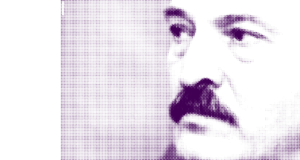
Aleksandr Lukashenko is not the legitimate president of Belarus. He is a dictator whose modus operandi is fundamentally geared towards preserving absolute personal power over Belarus. The economic and political survival of the regime in Minsk is inextricably tied to Moscow. This dependency deepened considerably following the 2020 presidential election, which severed Lukashenko’s ties with the West. The inevitable corollary has been a de facto forfeiture of sovereignty, even as it is maintained de jure.
It is improbable that Lukashenko himself advocated the invasion of Ukraine in 2022; indeed, he was most likely informed of the decision only on the eve of the invasion. The Lukashenko regime stands to gain nothing from Russian aggression, even in the event of its complete success — an outcome that has long since ceased to be plausible. Nonetheless, operating under severely constrained sovereignty, the Belarusian dictator lacks the latitude to refuse involvement, albeit indirect, in Moscow’s aggression. For Lukashenko, the withdrawal of Moscow’s patronage would almost certainly precipitate the collapse of his rule — whether engineered by regime functionaries with European backing or orchestrated directly by Moscow.
The integration of the Russian and Belarusian economies has intensified under the pressure of Western sanctions. Assessments by Lithuanian intelligence indicate that even a comprehensive restoration of economic relations with the West would fail to offset Minsk’s structural reliance on Moscow, given Lukashenko’s unwillingness to countenance any regime transformation that might heighten the risk of losing power. Concurrently, an overriding imperative to maintain domestic political stability compels Lukashenko to resist potential Russian attempts to commit the Belarusian armed forces directly to combat operations.
The Armed Forces of Belarus number approximately 48,000 personnel. Of these, roughly 27,000 constitute the Ground Forces, with an additional 6,000 serving within the Special Operations Forces. In 2022, Minsk announced plans to expand its military establishment to 80,000; however, these ambitions remained unfulfilled, owing largely to fiscal constraints. Although precise figures remain undisclosed, Belarus has transferred substantial quantities of its own military hardware and munitions to Russia throughout the war. Notably, during the Ukraine’s Kursk offensive, materiel was drawn not merely from long-term storage depots, but directly from active operational units.
The overall combat readiness of the Belarusian army is broadly assessed as low: the military lacks the motivation to fight in someone else’s war, its troop strength precludes large-scale offensive operations, and its stockpiles have been systematically depleted by transfers to Russia. Whilst Belarus possesses an estimated mobilisation reserve of nearly 300,000 personnel, mobilisation represents an intensely toxic political measure — as demonstrated by the Russian experience. The likelihood of its enactment is substantially lower than the already marginal risk of regular Belarusian forces directly entering the conflict. Plausibly, the very depletion of Belarusian stockpiles to supply Russian Armed Forces serves as Lukashenko’s primary pretext for resisting Kremlin pressure to commit his own formations to an offensive — whether against Ukraine or the Baltic states.
This dynamic engenders a strategic paradox: the actual combat utility of the Armed Forces of Belarus to Russia remains negligible. In an extreme contingency, they could at best be utilised to safeguard and operate rear logistical infrastructure — precisely the role Belarus currently performs for the Russian Federation. Conversely, the liabilities Russia would incur should Belarus formally enter the conflict would be severe: the forfeiture of an untouchable strategic sanctuary, the disruption of critical sanctions-evasion channels, a precipitous decline in refined fuel imports, and direct Ukrainian retaliatory strikes against the Belarusian defence-industrial base.
This risk calculus significantly diminishes the likelihood of regular Belarusian formations being committed to the war against Ukraine or deployed in any potential aggression against the Baltic states. Nonetheless, Russia continues to require raw manpower to sustain its war of attrition. From the onset of the full-scale invasion until mid-2025, just over 1,000 Belarusian nationals signed enlistment contracts with the Russian Armed Forces. This remarkably low figure underscores the pervasive reluctance and apathy of the broader Belarusian populace towards direct participation in the conflict.
A far more plausible trajectory involves the instrumentalisation of the Belarusian KGB and Special Operations Forces for deniable hybrid operations against Europe, alongside Moscow’s covert cultivation of local radical proxies — both to harvest extremist manpower and to establish internal leverage over the Lukashenko regime. The operational model of fostering state-curated right-wing radicalism has already been refined by the Kremlin domestically. Structures such as Russkaya Obshchina (‘Russian Community’), Severny Chelovek (‘Northern Man’), and analogous entities serve as conduits to channel grassroots ethno-nationalism, orchestrate street violence without overtly implicating the authorities, and funnel volunteer cadres into the combat zone.
In September 2026, an extremist paramilitary entity styled Chorny Rusy (‘Black Rusyns’) emerged in Belarus. The group’s founding manifesto calls for the restoration of ‘Slavic unity’ and the imperial dogma of a ‘triune nation of Russia, Belarus, and Ukraine’. On the night of 5–6 October, unidentified masked operatives escorted a group of 20 irregular migrants to the Latvian border to forcibly push them into EU territory. When Latvian border guards moved to intercept the crossing, the operatives hurled stones, engaged in aggressive verbal abuse, and brandished ‘an object resembling a firearm’, compelling the Latvian patrol to fall back. Responsibility for this border provocation was subsequently claimed by Chorny Rusy.
Shortly thereafter, a group of unidentified individuals breached the border perimeter once again, deliberately sabotaging an electrical distribution box and dismantling CCTV cameras before retreating into Belarusian territory. On 7 October, Chorny Rusy formally claimed responsibility for this second incident as well.
Open-source monitoring of the organisation’s social media indicates that it conducts armed tactical drills with live firearms, professing preparation for an imminent confrontation with the West. Given the suffocating degree of surveillance and repressive control exercised by the Belarusian KGB, it is inconceivable that such an organisation could operate without the direct connivance and direction of the Belarusian security services or, more plausibly, Russia itself. The operational success of these incursions sets a dangerous precedent for their replication, signalling a qualitative escalation in Moscow’s hybrid warfare against Europe — now manifesting in deliberate territorial violations carried out by deniable, armed proxies operating without state insignia.
Russian aggression against Europe persists, while the risk of a conventional military incursion into the Baltic states remains sufficiently acute to necessitate robust European planning for such a contingency. Although it is impossible to forecast the precise configuration of the Lukashenko regime’s operational involvement, available intelligence and established behavioural patterns allow for an assessment of plausible trajectories.
Lukashenko will consistently seek to minimise Belarus’s direct kinetic commitment to hostilities, as belligerence runs fundamentally counter to his regime-survival calculus. Instead, Minsk will continue to afford Moscow unreserved economic, logistical, and infrastructural assistance. The Belarusian military is ill-prepared to conduct combat operations even by the baseline standards of 2022, let alone the technologically evolved requirements of modern warfare. Moreover, its deployment could precipitate acute domestic political turbulence in Minsk, thereby risking the destabilisation of an indispensable rear sanctuary underpinning the Russian war effort.
The substantial erosion of Minsk’s de facto sovereignty will enable the Russian Federation to intensify recruitment among Belarusian nationals, cultivate curated radical proxies to mount hybrid operations against Europe, and expand its direct coercive leverage within domestic Belarusian politics. Concurrently, the operational capabilities of the Belarusian KGB and Special Operations Forces will be instrumentalised to prosecute this shadow war against Europe and suppress dissent within the Union State itself. For Lukashenko personally, acquiescence to this dynamic represents the preservation of the immediate status quo.
Conversely, a full-scale Russian invasion of the Baltic states carries existential risks for Minsk. In such a scenario, it is highly probable that Belarusian territory would once again be used as an offensive staging ground. Kinetic escalation against NATO would almost certainly strip the Lukashenko regime of its current sanctuary status, exposing Belarusian industrial, energy, and logistical nodes to retaliatory strikes. The operational execution of this contingency would require Moscow either to curtail offensive operations in Ukraine substantially or to undertake a new wave of large-scale mobilisation measures comparable to the autumn of 2022. Should either or both conditions materialise, the threat of an imminent incursion becomes critical.
A scenario of limited Russian aggression — such as a sub-threshold land grab targeting Narva modelled on eastern Ukraine in 2014, or an airborne/amphibious assault on Gotland — gives the Lukashenko regime greater leeway to preserve the status quo. However, should such coercive gambits fail to trigger the strategic implosion of NATO sought by Moscow, the structural pressures pulling Minsk directly into open conflict will escalate precipitously.
The Belarusian regime does not constitute an autonomous strategic actor. It exercises strictly circumscribed discretion within Russia’s imperial architecture; paradoxically, the regime’s very survival remains contingent upon the continuous surrender of this residual autonomy to Moscow.
© 2026 ALL RIGHTS ARE RESERVED